Dental implant maintenance is a heavy and arduous task, which is an effective guarantee for the success of implant plans and requires long-term efforts from both doctors and patients. The maintenance of dental implants requires not only the in room maintenance of medical personnel (doctors, nurses), but also the active cooperation of patients in their daily lives (outside the clinic). This requires relevant education for patients to understand the characteristics and maintenance methods of implant dentures, and to deeply recognize the important role they play in the maintenance process, so as to actively participate in it, cooperate perfectly with medical staff, and ensure the success of implant dentures. The following oral experts will mainly introduce the post maintenance of dental implants from three aspects: health education, self-care, and professional maintenance.
One Health education on implant denture maintenance
To carry out effective implant maintenance, patients must fully recognize the importance of long-term and effective implant maintenance. The long-term stability of implants depends on the success of osseointegration and is also influenced by the surrounding tissues of the implant. Dental implants do not suffer from caries or dental pulp diseases. The disease of peri implant tissue is the most important reason for oral implant failure, and has a high incidence rate.
Compared with natural teeth, the gingival tissue around the implant is more affected by plaque. Once the mucosal seal is damaged, pathogenic bacteria can obtain a direct channel to the root surface of the implant, which can cause alveolar bone resorption, implant loosening, and even dental implant failure. The key factor in health education regarding implant denture maintenance is to first make patients aware that plaque around the implant is the main cause of implant failure.
To this end, methods such as using plaque display agents can be used to create a visual impression of the plaque condition of the dentures used by patients, in order to enhance their oral hygiene awareness and cultivate good oral hygiene habits. Doctors should provide patients with simple and effective oral hygiene cleaning methods, while also helping them establish correct chewing habits. Due to the process required for the combination of the implant and surrounding bone tissue, chewing food should gradually transition from soft to hard after the completion of implant restoration, so that the weight-bearing capacity of the implant denture can gradually normalize. And try to avoid biting foods with excessive hardness or toughness in future use.
II Self maintenance of dental implants
1. Mechanical plaque control method:
(1) Brushing teeth is generally recommended once in the morning and once in the evening, each time for no less than 3 minutes. It can also be added once after lunch, and toothpaste and dental foam can be used. It is best to choose a health toothbrush, with a small brush head, elastic bristles, flat brush surface, and preferably soft bristles with 2-3 rows. Using BASS brushing method will achieve better results.
(2) The correct use of dental floss, toothpicks, and interdental brushes. It is best to use dental floss once a day, and it is recommended to use 30-40cm dental floss.
(3) The use of a water flushing dental cleaner adopts the principle of high-frequency pulse flushing. The water is pressurized by the pump body to generate an ultra-fine high-pressure pulse water column of 1200 times per minute, which is then flushed to any part of the oral cavity through the nozzle to clean difficult to reach "dead corners" such as toothbrushes, dental floss, toothpicks, etc. After meals, ideal results can be achieved by flushing for only 1-3 minutes. In addition, the dental irrigator adopts a non solid contact cleaning method, and the impact generated by its high-pressure pulse water flow is a flexible stimulus, which not only does not damage the implant and its surrounding tissues, but also can massage the gums and avoid gum recession. Activate periodontal tissue and promote long-term health of dental implants.
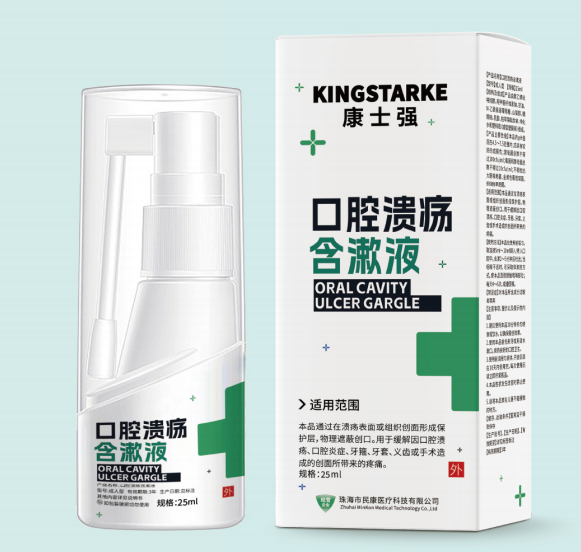
2. Chemical plaque control method: It is recommended to use Kangshiqiang Biopeptide mouthwash, 15 milliliters each time, 1-2 times a day, and alternate with saline solution for ideal results. Alternatively, continuous use of dental foam is also an ideal choice.
3. Quit smoking: To maintain the long-term success rate of dental implants, quitting smoking is necessary.
III Professional maintenance of implants
Relying solely on home maintenance cannot completely control plaque. To achieve the expected results, it is necessary to combine regular professional maintenance of the implant. This operation needs to be completed by a dentist with the active cooperation of the patient. At present, the trial methods for removing dirt from the surface of implants include ultrasonic cleaning, manual cleaning with a cleaner, laser treatment, sandblasting, and rinsing with Kangshiqiang biological peptide mouthwash. Laser processing is currently considered an ideal processing method. Moreover, for patients with periodontal disease, it is important to actively seek periodontal treatment, and for those with high blood sugar, it is important to actively control their blood sugar levels. The follow-up of dental implants is also very important.


