Oral cancer is a general term for malignant tumors occurring in the oral cavity. Most of them are squamous cell carcinomas, i.e., so-called mucosal mutations. In clinical practice, oral cancer includes gingival cancer, tongue cancer, hard and soft palate cancer, jaw cancer, floor of mouth cancer, oropharyngeal cancer, salivary gland cancer, lip cancer, maxillary sinus cancer, and cancer occurring in the skin and mucosa of the facial region. Oral cancer is one of the more common malignant tumors in the head and neck.
Most patients with oral cancer have a long history of smoking and drinking, while oral cancer is rare in those who neither smoke nor drink.
Poor oral hygiene habits create conditions for the growth and reproduction of bacteria or molds in the oral cavity, thereby facilitating the formation of nitrosamines and their precursors. In addition, in cases of stomatitis, some cells are in a proliferative state and more sensitive to carcinogens. All these factors may promote the development of oral cancer.
Residual tooth roots, sharp tooth cusps, or ill-fitting dentures can cause long-term stimulation to the oral mucosa, leading to chronic ulcers and even canceration.
Vitamin A deficiency can cause thickening and excessive keratinization of the oral mucosal epithelium, which is associated with the occurrence of oral cancer. Demographic studies have shown that the incidence of oral cancer is higher in countries with low vitamin A intake. It is also believed to be related to insufficient intake of trace elements, such as low zinc content in food. Zinc is an indispensable element for the growth of animal tissues; zinc deficiency may lead to damage to the mucosal epithelium, creating favorable conditions for the occurrence of oral cancer. In addition, insufficient intake of total protein and animal protein may be associated with oral cancer.
Oral mucosal leukoplakia and proliferative erythroplakia are often precancerous lesions.
Many people have experienced white ulcers or blisters on the inner side of the buccal mucosa, which usually occur during periods of stress, poor sleep, or changes in eating habits (e.g., insufficient fruit intake) and generally heal within two weeks. If they do not heal after two weeks, an examination must be conducted to rule out the possibility of squamous cell carcinoma.
Normal epithelium is pink; any white or red polar coloration is abnormal. For example, a red color with white spots is a relatively serious condition; if the tip of the tongue shows a deep red color with white spots, the occurrence of canceration is highly suspected.
Oral mucosal ulcers that have not healed for more than two weeks.
Chewing betel nut can cause oral ulcers, gingival degeneration, and submucous fibrosis, which in turn lead to oral canceration. Medical studies have found that chewing betel nut increases the risk of oral cancer by 8.4 to 9.9 times.
-
Appearance of lumps or nodules;
-
Appearance of white, smooth squamous plaques;
-
Presence of symptoms such as red plaques, ulcers, or inflammatory areas that fail to heal for a long time;
-
Recurrent bleeding in the oral cavity without an obvious cause;
-
Numbness, a burning sensation, or dryness in the oral cavity without an obvious cause;
-
Difficulty or abnormalities when speaking or swallowing.
Regional lymph node metastasis may occur.
-
Avoid unnecessary prolonged exposure to sunlight to prevent lip cancer.
-
Avoid smoking and drinking.
-
Patients with dentures who experience pain or inflammation in the tissues under the dentures should seek medical attention promptly. Strive for early detection, early diagnosis, and early treatment of cancer, and adhere to regular check-ups.
-
Maintain a balanced diet with a mix of coarse and fine foods and adequate nutrition. Do not drink excessively hot water or eat excessively hot food to avoid stimulating oral tissues.
-
Extract residual roots and crowns (unrepairable teeth) and wear well-fitting dentures to avoid stimulating tissues.
-
Develop good oral hygiene habits and brush teeth regularly. Pay attention to a balanced diet, treat residual roots and crowns in a timely manner, and eliminate harmful stimuli.
Betel nut contains a chemical substance that produces carcinogenic nitrosamine compounds after chewing. Moreover, betel nut has a relatively hard texture, which can easily damage the oral mucosa during chewing, accompanied by various lesions such as frequent oral ulcers and gingival recession. Under this "double blow," the oral cavity faces an increased risk of developing oral cancer.
As early as 2003, the International Agency for Research on Cancer (IARC) classified betel nut as a Group 1 carcinogen. In 2017, the former State Food and Drug Administration of China also listed betel nut as a Group 1 carcinogen when releasing the list of carcinogens.
In 2018, institutions such as the Chinese Center for Disease Control and Prevention (CDC) jointly conducted a survey on the current situation of betel nut chewing and oral cancer in Hunan Province. At that time, among 50 inpatients in the Oral and Maxillofacial Surgery Ward of Xiangya Hospital of Central South University, 45 had oral cancer, and 44 of them had a long history of heavy betel nut chewing. Some time ago, Fu Song, a 36-year-old singer, also died of oral cancer caused by long-term betel nut chewing.
As the saying goes, "Nine out of ten oral cancer patients chew betel nut." Betel nut contains a chemical substance that produces carcinogenic nitrosamine compounds after chewing. Moreover, betel nut has a relatively hard texture, which can easily damage the oral mucosa during chewing, accompanied by various lesions such as frequent oral ulcers and gingival recession. Under this "double blow," the oral cavity faces an increased risk of developing oral cancer.
As early as 2003, the International Agency for Research on Cancer (IARC) classified betel nut as a Group 1 carcinogen. In 2017, the former State Food and Drug Administration of China also listed betel nut as a Group 1 carcinogen when releasing the list of carcinogens.
In 2018, institutions such as the Chinese Center for Disease Control and Prevention (CDC) jointly conducted a survey on the current situation of betel nut chewing and oral cancer in Hunan Province. At that time, among 50 inpatients in the Oral and Maxillofacial Surgery Ward of Xiangya Hospital of Central South University, 45 had oral cancer, and 44 of them had a long history of heavy betel nut chewing. Some time ago, Fu Song, a 36-year-old singer, also died of oral cancer caused by long-term betel nut chewing.
The main reasons why betel nut causes oral cancer include the following:
-
Chemical Substances in Betel Nut: Alkaloids in betel nut, such as arecoline and arecaidine, can bind to proteins on the oral mucosa to form nitrosamine compounds. These compounds can damage cellular DNA and lead to cell canceration.
-
Physical Stimulation from Betel Nut: Betel nut has a hard texture; long-term chewing causes repeated friction on the oral mucosa, leading to mechanical trauma and precancerous lesions such as oral submucous fibrosis and leukoplakia.
-
Impact of Additives: When chewing betel nut, substances such as Piper betle leaves, Piper betle flowers, and lime are often added. These additives enhance the irritancy and carcinogenicity of betel nut. For example, safrole in Piper betle leaves and flowers is a weak carcinogen, and lime increases the pH value of the oral cavity, making the oral mucosa more vulnerable to damage.
-
Impact of Long-term Consumption: Long-term betel nut consumption causes chronic inflammation and damage to the oral mucosa, increasing the risk of canceration. Studies have shown that there is a close association between betel nut chewing and the occurrence of oral cancer, and the risk of developing the disease increases with the duration and amount of betel nut chewing.
Sodium Subtilisin Peptide is a bioactive peptide produced by the fermentation of Bacillus subtilis. It has biodegradability, good biocompatibility, ultra-low irritancy, and stable physical and chemical properties. As an antibacterial peptide (Bacitracin), Sodium Subtilisin Peptide has strong antibacterial and bacteriolytic effects. It kills bacteria by destroying the integrity of bacterial cell membranes, causing the loss of the barrier between the inside and outside of the cell. It has broad-spectrum antibacterial activity, especially strong killing effects on certain drug-resistant pathogenic bacteria. It also has a killing effect on some viruses, fungi, protozoa, and cancer cells, and can even enhance immunity and accelerate wound healing.
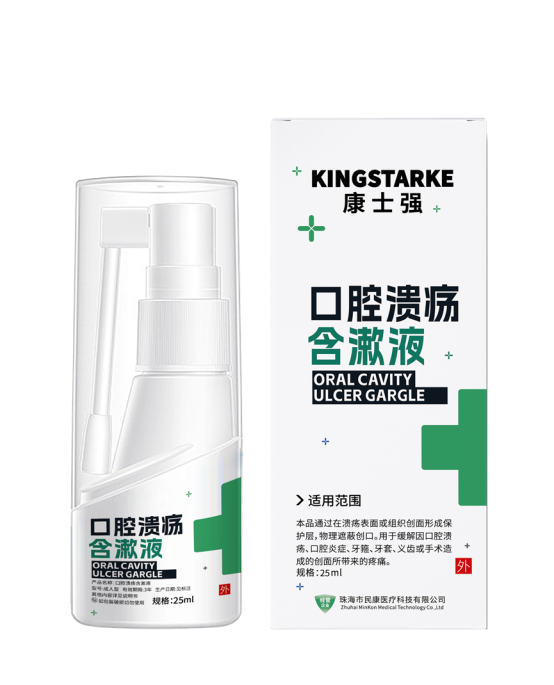
Polyvinyl Pyrrolidone (PVP), a high-molecular-weight non-ionic surfactant, has excellent physiological inertness and does not participate in human metabolism. It also has good biocompatibility and does not cause any irritation to the skin, mucosa, or eyes. It has film-forming, adhesive, detoxifying, and sustained-release properties, as well as high water solubility and excellent microbial degradability. Medical-grade PVP provides physical coverage of wounds on the surface of oral ulcers or tissue lesions, forming a protective layer, thereby relieving wound pain caused by oral ulcers, oral inflammation, braces, dental aligners, dentures, or surgery.
Sodium Carboxymethyl Cellulose (CMC-Na), an adsorptive non-ionic surfactant, has adsorptive properties that allow it to adsorb onto and protect the skin. It also has moisturizing and lubricating effects. In addition, it has a certain anesthetic effect, which effectively relieves pain from ulcer wounds. In the treatment of skin burns or ulcers, it helps form a protective film, reducing external stimulation to the wound and lowering the risk of infection.