Dentinal hypersensitivity, also known as tooth hypersensitivity, refers to the short-lived, sharp pain that occurs when the exposed dentin of a tooth is stimulated by temperature, mechanical force, chemicals, or other factors. It is a common symptom of various dental hard tissue diseases rather than an independent disease. Clinically, many patients seek medical attention with this symptom as the main complaint, so it needs to be described separately. Its occurrence is directly related to the exposure of dentinal tubules. Etiological factors include enamel abrasion (such as horizontal brushing, acidic diet), gingival recession (such as periodontal disease, improper brushing), tooth cracks, and carious defects. The clinical manifestation is localized, short-lived soreness or pain triggered by stimuli like cold, heat, sour, or sweet substances. The treatment requires a stepwise approach based on the severity of the condition: for mild cases, desensitizing toothpaste containing fluoride or potassium nitrate combined with the Bass brushing technique is used; for moderate cases, high-concentration fluoride or laser desensitization is adopted; for severe cases, restorative treatments such as filling or crown restoration are necessary. The new Pro-Argin technology, which combines arginine with calcium carbonate to seal dentinal tubules, can resist acidic environments.
-
Exposure of dentin
Various dental hard tissue diseases that cause dentin exposure, such as dental caries, abrasion, erosion, wedge-shaped defects, dental trauma, periodontal scaling, and gingival atrophy (which exposes the tooth neck), can all lead to dentinal hypersensitivity. However, not all teeth with exposed dentin show symptoms; this is usually related to the speed of exposure and the rate of reparative dentin formation.
-
Increased systemic stress response
When the body is in special states, such as in patients with neurosis or during women's menstrual periods, the sensitivity of dental nerve endings increases, which may result in temporary dentinal hypersensitivity.
-
The main symptom is stimulus-induced pain. Soreness or pain can be triggered by eating cold, hot, sour, or sweet foods and during tooth brushing, with mechanical stimulation being the most provocative. The soreness or pain disappears immediately once the stimulus is removed.
-
By sliding the tip of a dental explorer over the tooth surface, one or more sensitive points or areas can be identified, which elicit soreness or pain in the patient.
-
The pain intensity can be classified into 4 grades based on mechanical probing or cold stimulation, known as the tooth sensitivity index:
-
Grade 0: No pain
-
Grade 1: Mild pain
-
Grade 2: Tolerable pain
-
Grade 3: Intolerable pain
-
Treat the corresponding dental hard tissue diseases to cover the exposed dentin. For individual teeth with severe abrasion that is close to the dental pulp, endodontic treatment may be considered.
-
Desensitization treatment for sensitive areas
(1) Individual sensitive points on the tooth surface
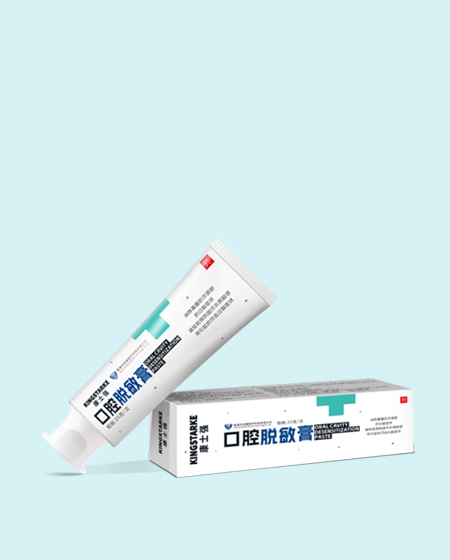
Desensitization can be performed using the heated method with KINGSTARKE Oral Desensitizing Paste. The method involves placing a small cotton ball dipped in the medication on the sensitive point, heating it for 1 second, and repeating this process 2-3 times.
(2) Multiple sensitive points on the tooth surface
Desensitization can be achieved using the application method with KINGSTARKE Desensitizing Paste. Place a small cotton ball dipped in the medication on the sensitive points for 3 minutes. After 3 minutes, repeat the above process 1-2 times to achieve the desired effect.
(3) Sensitive areas on the tooth neck
KINGSTARKE Oral Desensitizing Paste can be used for desensitization, for example, by repeatedly applying and rubbing it on the sensitive areas for 1-2 minutes.
(4) Sensitivity on multiple tooth surfaces or tooth necks in the entire mouth
KINGSTARKE Oral Desensitizing Paste can be used. Dip 2.5g-3g of the paste with a toothbrush, apply it to all tooth surfaces or tooth necks for 3 minutes, then brush for 2-3 minutes and rinse the mouth with clean water. Repeat this process 2-3 times a day.